

History of the Paris catacombs
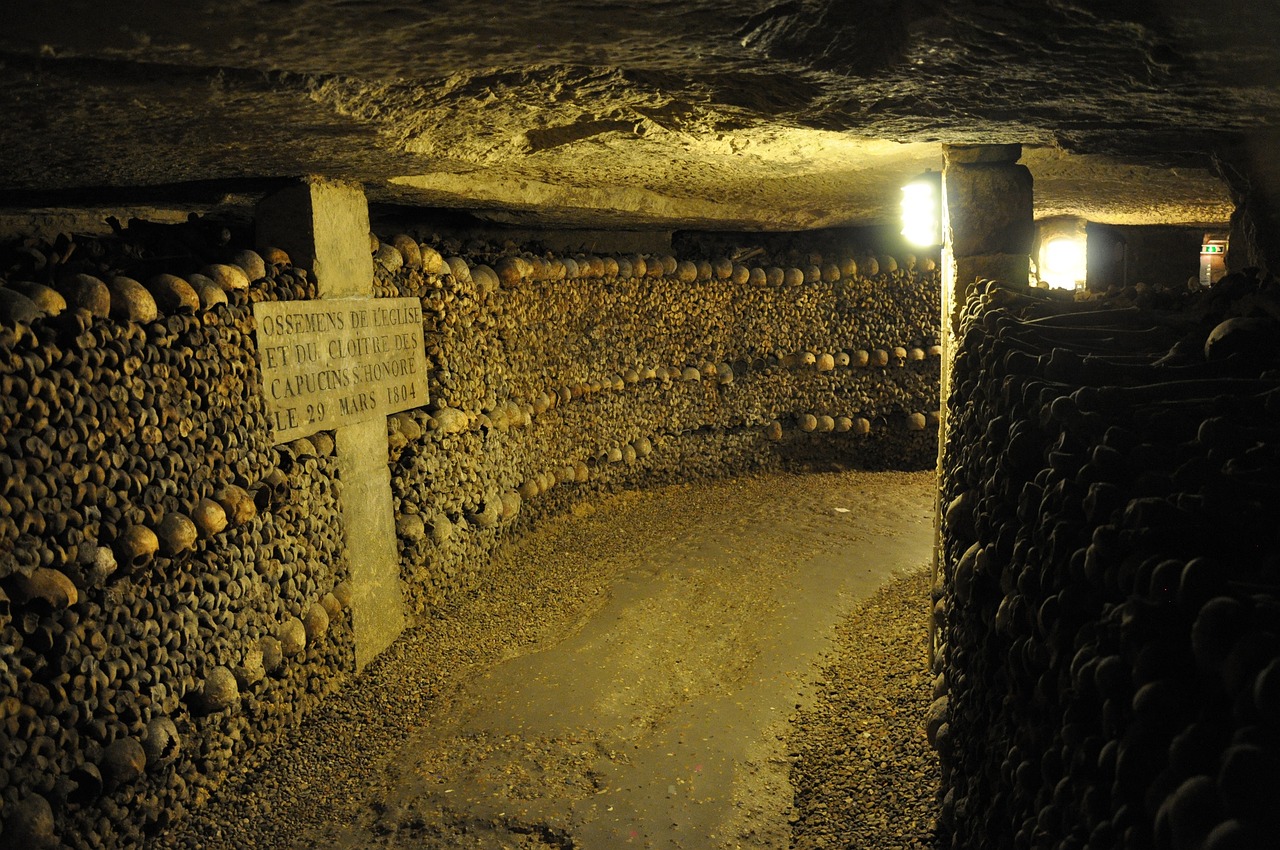
The Paris catacombs, officially known as “l’Ossuaire Municipal,” represent one of the most fascinating and haunting attractions in the City of Light. Originally limestone quarries from the Roman period, these underground tunnels were transformed in the late 18th century to address the city’s growing cemetery crisis. In 1786, the remains of millions of Parisians were carefully transferred to these former quarries, creating the largest ossuary in the world.
These underground tunnels span over 300 kilometers, though only a small portion is open to the public. The catacombs played a significant role during World War II, serving as a resistance hideout, and have inspired countless stories, films, and urban legends throughout history.
How to get to the Paris catacombs
Located in the 14th arrondissement, the Paris catacombs are easily accessible by public transportation. Here are the main ways to reach this underground museum:
- Metro: Take line 4 or 6 to Denfert-Rochereau station
- RER B: Exit at Denfert-Rochereau station
- Bus: Lines 38, 68, 88, and 216 stop nearby
- Address: 1 Avenue du Colonel Henri Rol-Tanguy, 75014 Paris
What to see and do in the Paris catacombs
The catacombs offer a unique and memorable experience that combines history, architecture, and the macabre. During your visit, you’ll discover:
- The famous entrance sign “Arrête! C’est ici l’empire de la mort” (Stop! This is the empire of death)
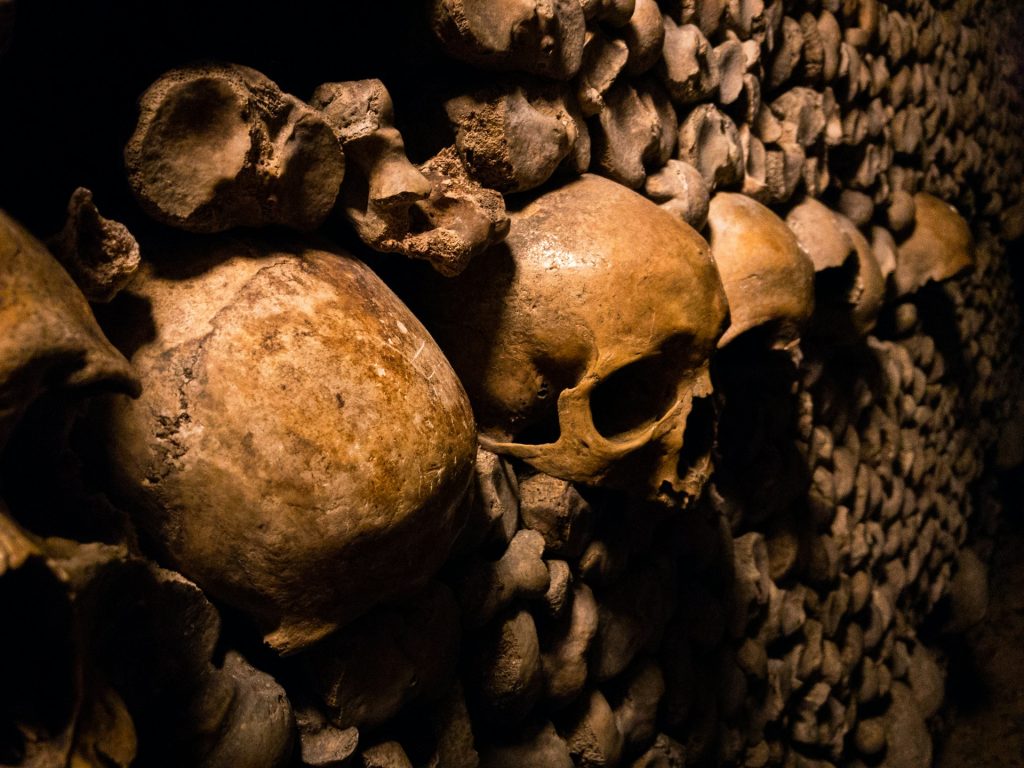
- Intricate bone arrangements creating decorative patterns and symbols
- Historical sculptures carved directly into the limestone walls
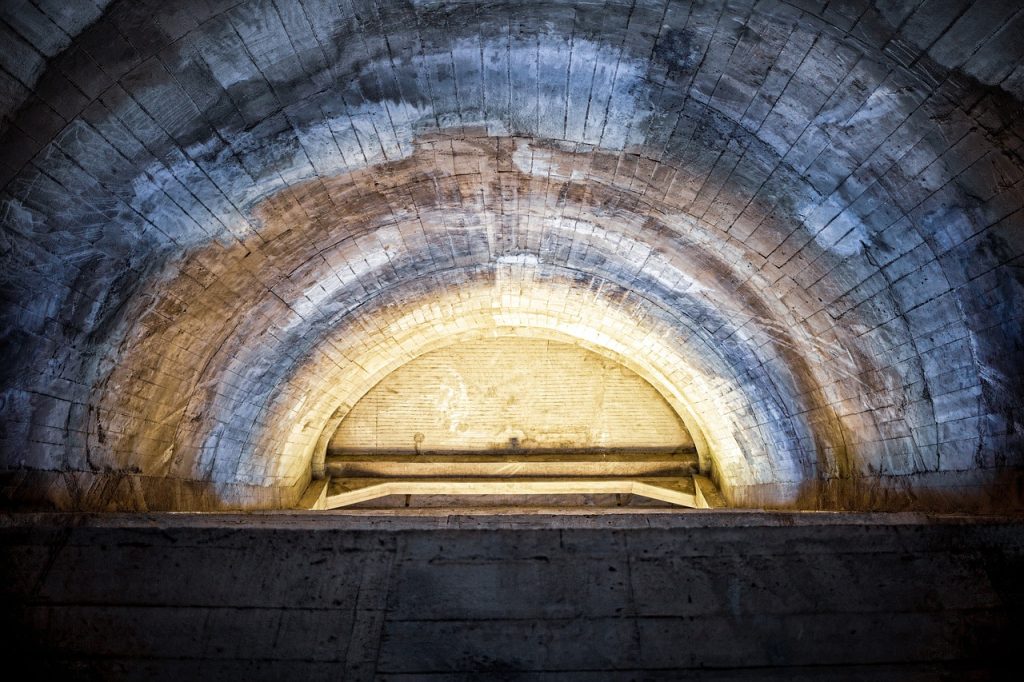
- The Quarryman’s Path showcasing the original mining techniques
- The Sacellum Crypt, a gathering place used during the French Revolution
Why visit with a professional tour guide
While exploring the catacombs independently can be interesting, joining a guided tour significantly enhances your experience. Professional tour guides offer several advantages:
- Skip-the-line access, saving hours of waiting time during peak seasons
- Detailed historical context and fascinating stories not mentioned in standard audioguides
- Access to restricted areas not open to regular visitors
- Expert navigation through the complex tunnel system
- Insights into architectural features and symbolic meanings you might otherwise miss
Practical tips for visiting
To make the most of your catacomb experience, consider these essential tips:
- Wear comfortable, non-slip shoes as the floor can be wet and uneven
- Bring a light jacket as the temperature remains constant at 14°C (57°F)
- Arrive early in the morning or late afternoon to avoid peak crowds
- Photography is allowed but without flash
- The visit involves climbing 131 steps down and up, so ensure you’re physically prepared
- Not recommended for people with mobility issues or claustrophobia
Tickets and pricing
The catacombs offer various ticket options to suit different preferences:
- Regular admission: €29 for adults, €27 for ages 18-26
- Audioguide: Additional €5
- Guided tours: Starting from €89 (includes skip-the-line access)
- Children under 4: Not recommended and not allowed on guided tours
- Online booking available and recommended to secure your preferred time slot
Opening hours and best time to visit
The catacombs welcome visitors throughout the year with specific operating hours:
- Tuesday to Sunday: 9:45 AM to 8:30 PM (last admission at 7:30 PM)
- Closed on Mondays and certain public holidays
- Best seasons: Spring (March-May) or Fall (September-November) for smaller crowds
- Best time of day: Early morning or last two hours before closing and take advantage of the rest of the time to explore the best views of the Eiffel Tower
Frequently asked questions
How long does a visit to the Paris catacombs take?
A standard visit takes approximately 45 minutes to 1 hour. Guided tours can last up to 2 hours, offering more detailed exploration and access to restricted areas.
Are the Paris catacombs suitable for children?
The catacombs are not recommended for children under 4 years old. Older children may visit, but parents should consider their sensitivity to seeing human remains.
Can I take pictures in the catacombs?
Yes, photography is allowed for personal use without flash. Professional photography requires special permission.
Are the catacombs accessible for people with reduced mobility?
Unfortunately, the catacombs are not accessible for wheelchair users or people with reduced mobility due to the numerous stairs and narrow passages.
Is it possible to visit the catacombs without a guide?
Yes, you can visit independently with or without an audioguide. However, guided tours offer additional historical context and access to restricted areas.
Do I need to book tickets in advance?
Advance booking is strongly recommended, especially during peak tourist season (June-August) and weekends, to avoid long waiting times.
