

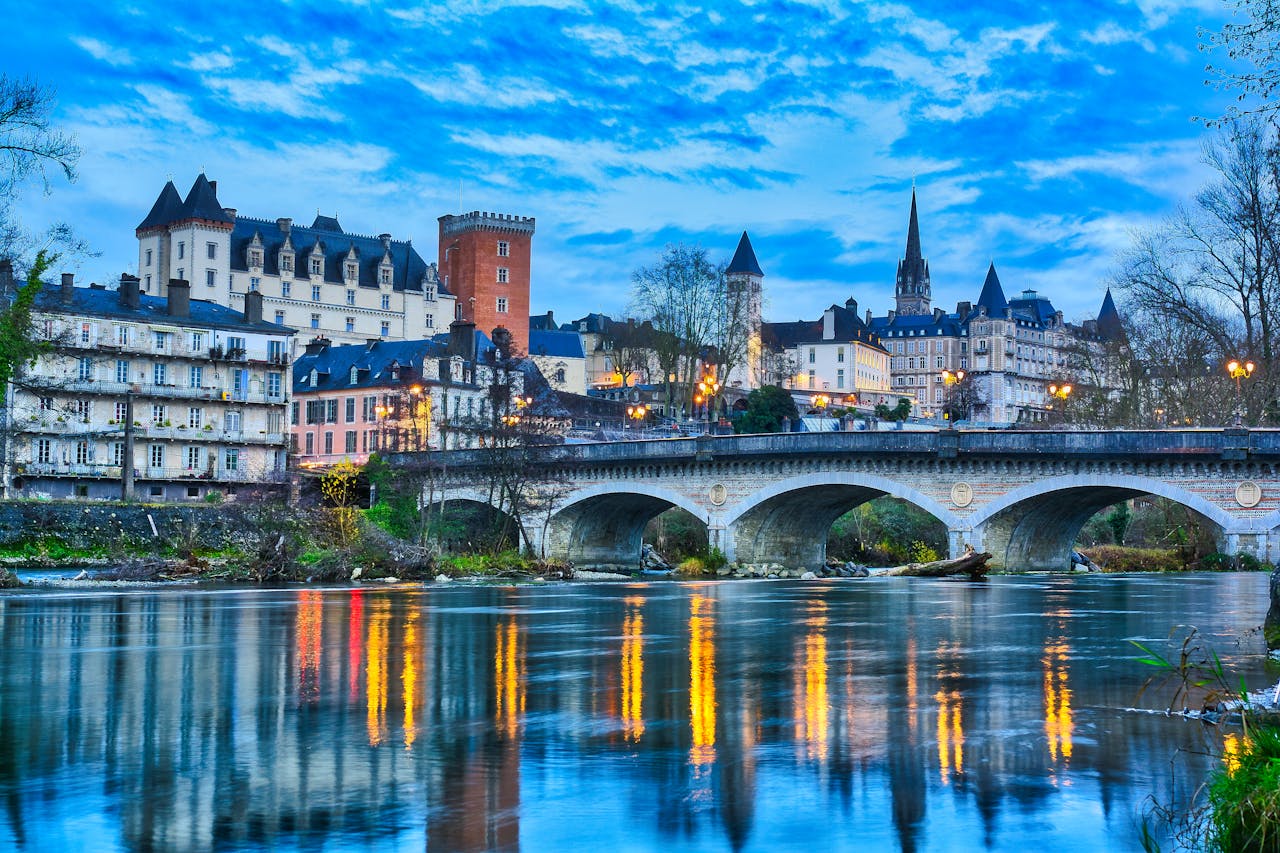
Discover Pau, a charming city in southwestern France that serves as the capital of the Pyrénées-Atlantiques department. Known for its stunning views of the Pyrenees mountains, rich history, and exceptional quality of life, Pau offers visitors a perfect blend of cultural heritage, outdoor activities, and gastronomic experiences.
History of Pau
Founded in the Middle Ages, Pau gained prominence when it became the capital of Béarn in 1464. The city’s most famous historical connection is with King Henry IV of France, who was born in the Château de Pau in 1553. During the 19th century, Pau became a popular winter resort for British and American visitors, contributing to its development as a sophisticated cultural center. This period left a lasting impact on the city’s architecture and culture, with numerous Victorian-style villas and the first golf course in continental Europe. The British influence can still be felt today in the city’s urban planning, architecture, and sporting traditions.
How to get Pau
Pau is easily accessible through various modes of transportation, making it a convenient destination for both domestic and international travelers. The city’s strategic location at the foothills of the Pyrenees makes it an ideal gateway to both the mountains and the Atlantic coast. Whether you’re arriving by air, rail, or road, you’ll find the journey comfortable and well-connected.
- By plane: Pau Pyrénées Airport offers direct flights from Paris and other major French cities
- By train: Regular TGV services connect Pau to Paris (4.5 hours) and other major cities
- By car: Access via the A64 motorway (Toulouse-Bayonne)
- By bus: Long-distance bus services connect Pau to major French and European cities
What to do in Pau
Pau offers a rich tapestry of activities and attractions that cater to all interests. From historical monuments to cultural venues, the city presents a perfect blend of past and present. Every corner of Pau tells a story, and its varied attractions ensure that visitors can experience the city’s unique character in multiple ways.
Historical attractions
The city’s historical heritage is particularly well-preserved, offering visitors a journey through time. The magnificent Château de Pau stands as a testament to the city’s royal connections, while the Boulevard des Pyrénées provides one of the most spectacular urban views in Europe.
- Château de Pau – The historic castle and birthplace of King Henry IV
- Boulevard des Pyrénées – A magnificent promenade with mountain views
- Funicular of Pau – Historic transport linking the upper and lower city
- Place Royale – Central square with historic architecture
Cultural venues
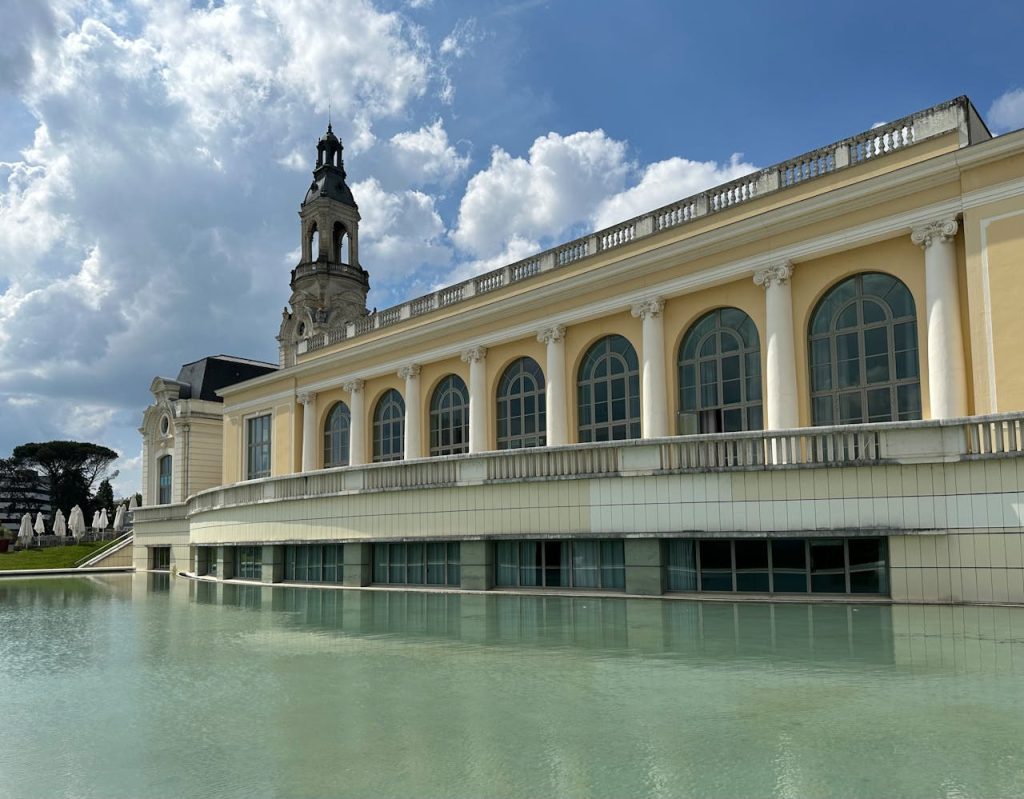
The cultural scene in Pau is vibrant and diverse, reflecting the city’s rich history and contemporary artistic spirit. Museums and galleries showcase everything from fine arts to local history, providing insight into the region’s cultural heritage.
- Musée des Beaux-Arts – Fine arts museum
- Musée Bernadotte – Former house of Marshal Bernadotte, who became King of Sweden
- Contemporary Art Space – Modern exhibitions and installations
Visit Pau in one day
While Pau deserves a longer stay, it’s possible to experience the city’s highlights in a single day. The compact city center allows for easy exploration on foot, and the efficient public transportation system helps you maximize your time. Start your day early to make the most of your visit and don’t miss the spectacular mountain views during golden hour.
- Morning: Visit Château de Pau and its museums
- Midday: Lunch in the historic center
- Afternoon: Walk along Boulevard des Pyrénées
- Evening: Dinner at a traditional Béarnais restaurant
Visit Pau in two days
A two-day visit allows you to explore Pau at a more leisurely pace, diving deeper into its culture and history. You’ll have time to appreciate the subtleties of the city’s architecture, enjoy longer meals at local restaurants, and perhaps even take a short trip to the surrounding countryside. The second day gives you the opportunity to explore beyond the main tourist sites and discover the authentic character of the city.
- Day 1: Follow the one-day itinerary
- Day 2: Explore the English-style gardens, visit Musée Bernadotte, and enjoy the local markets
Visit Pau in three days
Three days in Pau provides the perfect amount of time to fully immerse yourself in the city’s atmosphere and explore the surrounding region. You can combine city sightseeing with excursions to nearby attractions, allowing you to experience both urban culture and the natural beauty of the Pyrénées-Atlantiques department. This duration also gives you flexibility to adjust your plans according to weather conditions and local events.
- Day 1: Historic center and castle exploration
- Day 2: Museums and cultural venues
- Day 3: Day trip to nearby attractions (Lourdes or the Jurançon wine region)
Tips for visiting Pau
Making the most of your visit to Pau requires some planning and local knowledge. The city’s unique climate and topography can affect your experience, so it’s worth considering these aspects when planning your activities. Remember that Pau is a city that rewards those who take their time to explore its hidden corners and embrace its relaxed southern French lifestyle.
- Download the city’s mobile app for self-guided tours
- Use the free shuttle service in the city center
- Visit during clear weather for the best mountain views
- Take advantage of the Pau City Pass for attractions
Entry tickets and prices
Most of Pau’s attractions are reasonably priced, and many offer discounted rates for students, seniors, and families. The Pau City Pass provides excellent value for visitors planning to see multiple attractions. It’s worth noting that many gardens and public spaces are free to enter, allowing you to enjoy the city’s beauty without spending a fortune.
- Château de Pau: €7 (full price), free for under 26 EU residents
- Musée des Beaux-Arts: €5
- Musée Bernadotte: Free
- Pau City Pass: €15 for 24 hours
Opening hours
When planning your visit, keep in mind that many attractions in Pau follow typical French opening hours, including a lunch break in the middle of the day. Museums are generally closed on Mondays, and many shops close on Sundays. It’s always wise to check current opening times, especially during public holidays and the off-season.
- Château de Pau: 9:30-11:45 and 14:00-17:00 (closed Mondays)
- Museums: Generally 10:00-18:00 (closed Mondays)
- Tourist Office: 9:00-18:00 Monday to Saturday
- Shops: 10:00-19:00 (closed Sundays)
Best time to visit
Pau enjoys a remarkably mild climate throughout the year, thanks to its unique geographical position between the mountains and the ocean. Each season offers its own charm and advantages for visitors. The city experiences a special quality of light that has attracted artists and photographers for centuries, particularly during the spring and autumn months.
- Spring (April-June): Mild weather and beautiful gardens
- Summer (July-August): Warmest weather, festivals, but busier
- Fall (September-October): Pleasant temperatures and fewer tourists
- Winter (November-March): Christmas markets and potential snow views
Why visit with a professional tour guide?
A professional guide transforms your visit to Pau from a simple sightseeing experience into an immersive journey through history and culture. Local guides possess in-depth knowledge of the city’s hidden stories, architectural details, and cultural nuances that you might miss on your own. They can adapt tours to your interests and help you understand the complex history that has shaped this remarkable city.
- Sharing detailed historical knowledge about the castle and city
- Providing access to lesser-known viewpoints and hidden gems
- Offering insights into local traditions and culture
- Explaining the city’s British influences and architectural heritage
- Customizing the tour based on your interests
Local festivals and events
Throughout the year, Pau comes alive with various festivals and events that showcase its cultural diversity and vibrant community spirit. These celebrations range from traditional Béarnais festivities to international sporting events, providing visitors with unique opportunities to experience local culture at its most dynamic.
- Grand Prix de Pau (May)
- Hestiv’Oc Festival (August)
- Jazz Festival (January)
- Christmas Market (December)
Where to stay
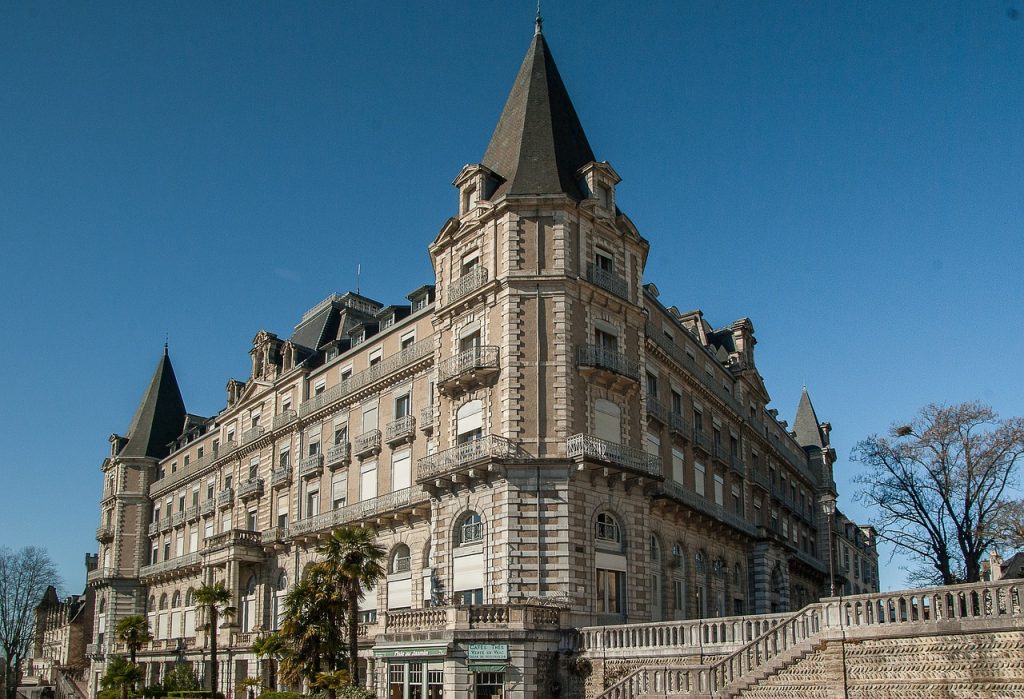
Accommodation in Pau caters to all preferences and budgets, from luxury hotels in historic buildings to cozy guesthouses and modern apartments. Many properties offer stunning views of the Pyrenees, while others place you in the heart of the historic center. The city’s compact size means that most accommodations are within walking distance of major attractions.
Accommodation options
- Historic hotels in the city center
- Modern hotels near the train station
- Boutique guesthouses in Victorian villas
- Apartments with mountain views
Local cuisine
The gastronomy of Pau reflects its position at the crossroads of mountain and valley cultures. The city’s culinary tradition combines hearty Béarnais dishes with refined French cuisine, all enhanced by excellent local produce and wines. Restaurants range from Michelin-starred establishments to cozy bistros serving traditional fare.
- Garbure (traditional soup)
- Jurançon wines
- Poule au pot (Henry IV’s favorite dish)
- Local cheeses and charcuterie
Sports and outdoor activities
Pau’s sporting heritage is rich and diverse, influenced by both its British visitors of the 19th century and its proximity to the Pyrenees. The city offers numerous opportunities for outdoor enthusiasts, from golf to mountain sports, making it a paradise for active visitors. The temperate climate allows for year-round outdoor activities.
- Golf at Pau Golf Club (oldest in continental Europe)
- Horse riding at the hippodrome
- Cycling along mountain routes
- White water activities on nearby rivers
Frequently asked questions
Is Pau worth visiting?
Yes, Pau offers a unique combination of historical heritage, stunning mountain views, and cultural attractions, making it an excellent destination for various interests.
How many days do you need in Pau?
While the main attractions can be seen in one day, 2-3 days allows you to fully appreciate the city and explore the surrounding region.
What is Pau famous for?
Pau is famous for being the birthplace of King Henry IV, its spectacular views of the Pyrenees, its historic castle, and its British influence during the Victorian era.
Can you see the Pyrenees from Pau?
Yes, the Boulevard des Pyrénées offers panoramic views of the mountain range on clear days, making it one of the city’s main attractions.
Is Pau a good base for exploring the Pyrenees?
Yes, Pau serves as an excellent base for exploring the Pyrenees, with easy access to mountain villages, ski resorts, and natural parks.
What is the weather like in Pau?
Pau enjoys a mild climate with moderate temperatures year-round, though winters can be cool and rainy. The city experiences over 1800 hours of sunshine annually.
