

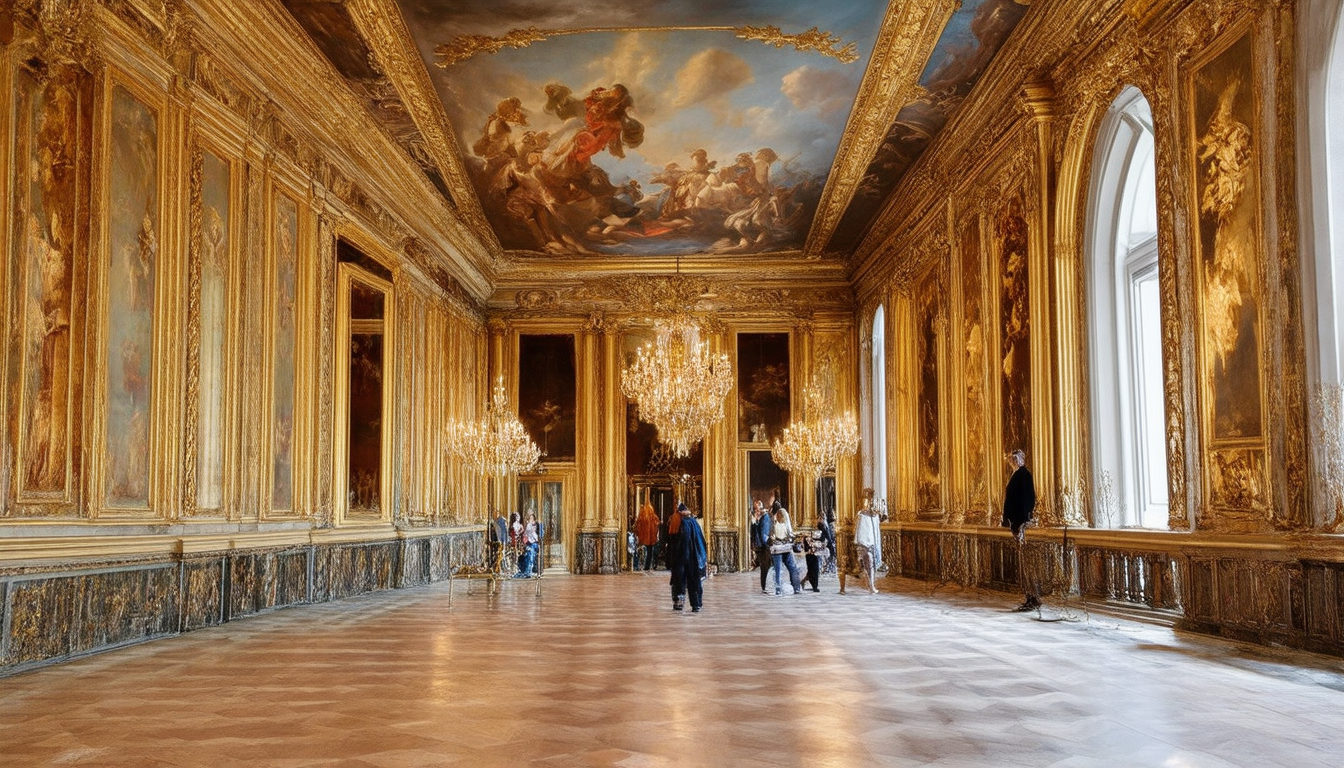
The Palais Garnier stands as one of Paris’s most magnificent architectural treasures. This opulent opera house, completed in 1875, perfectly embodies the grandeur of the Second Empire style. Housing the prestigious Paris Ballet and hosting world-class performances, this masterpiece by architect Charles Garnier welcomes over 800,000 visitors annually.
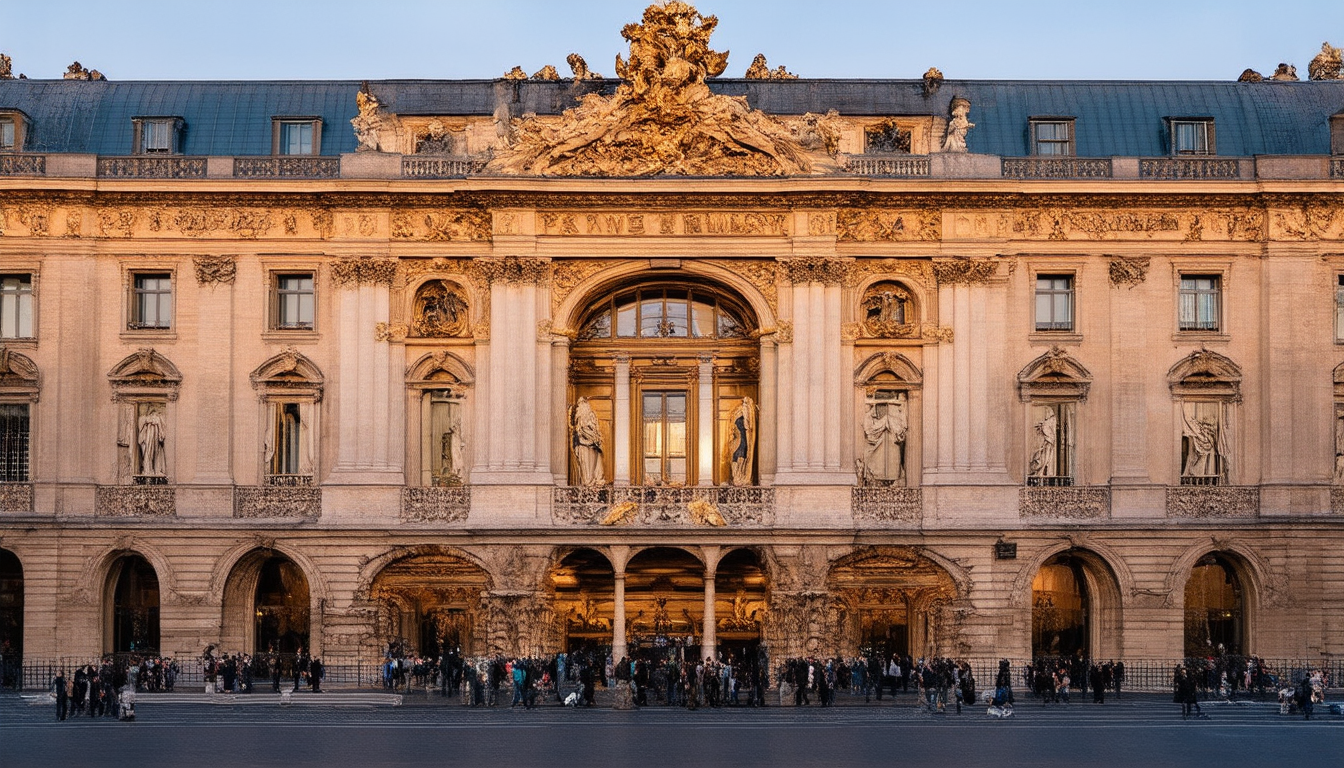
The Architectural Marvel of Palais Garnier
The Palais Garnier represents the pinnacle of 19th-century French architecture. The facade features an intricate blend of polychrome marble friezes, elegant columns, and elaborate sculptures. Two gilded figural groups, Harmony and Poetry, crown the apex, while the bronze Apollonian lyres sparkle on either side. The grand staircase, made of white marble with a balustrade of red and green marble, provides a dramatic entrance worthy of the performances staged within.
Interior Splendor
The auditorium ceiling, painted by Marc Chagall in 1964, depicts scenes from famous operas against a backdrop of swirling colors. The iconic chandelier, weighing over six tons, illuminates the room with 340 lights. The horseshoe-shaped auditorium seats 1,979 spectators, with excellent acoustics carefully designed by Garnier himself.
Planning Your Visit
The Opera Palais Garnier opens daily from 10:00 AM to 5:00 PM, except during performances. Self-guided tours allow visitors to explore the public areas, including the famous grand staircase, the grand foyer, and the auditorium. Guided tours, available in multiple languages, provide deeper insights into the building’s history and architecture.
Ticket Options and Practical Information
Advance booking through the official website ensures entry at your preferred time slot. The basic self-guided tour ticket costs €14 for adults, while guided tours start at €20. Photography without flash is permitted throughout the building.
The Cultural Heritage
The Paris Opera maintains its position as a cultural cornerstone of French performing arts. The building houses the Paris Opera Ballet Company, the oldest national ballet company in the world. The grand foyer, often compared to the Hall of Mirrors at Versailles, showcases ceiling paintings by Paul Baudry depicting the history of music.
Historical Significance
The opera house gained additional fame as the setting for Gaston Leroux’s 1910 novel ‘The Phantom of the Opera’. The legendary underground lake beneath the building, which inspired part of the story, actually exists as a water tank used to regulate the groundwater levels.
Experiencing Performances
Attending a performance at the Palais Garnier offers an unparalleled cultural experience. The venue primarily hosts ballet performances and classical concerts, while most opera productions take place at the modern Opéra Bastille. The season typically runs from September to July, featuring both traditional repertoire and contemporary works.
Booking Performance Tickets
Performance tickets should be booked months in advance through the official Paris Opera website. Prices vary significantly based on seating location and performance type, ranging from €20 for restricted view seats to over €200 for premium locations.
Surrounding Area and Amenities
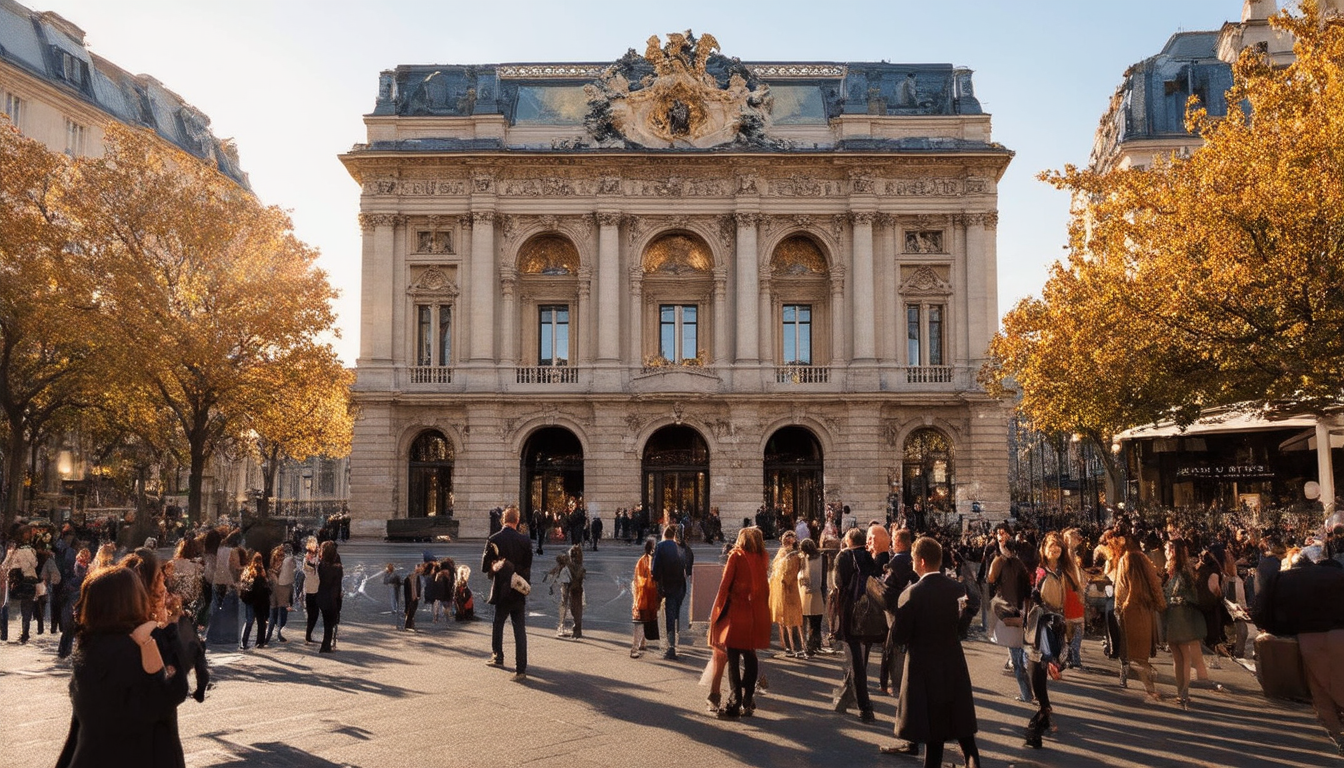
The Palais Garnier sits in the heart of Paris’s 9th arrondissement, surrounded by high-end shopping districts and historic architecture. The nearby Galeries Lafayette and Printemps department stores offer luxury shopping experiences. The opera house restaurant, L’Opera Restaurant, designed by Odile Decq, provides fine dining in a contemporary setting within this historic building.
Transportation and Access
Multiple metro lines (3, 7, 8, 9) serve the Opera station directly in front of the building. The RER A line stops at nearby Auber station. The central location makes it easily accessible from any part of Paris, and numerous parking facilities exist in the vicinity for those arriving by car.
